ke kumu pa’a
Architecture: Hawai’i Off Grid Architecture
Principal: David Sellers
Project Managers: Jae Geun Yoo
Architectural Staff: Austin Pollard, Sophia Xiaojie Cao
The construction industry in the state of Hawai’i faces three critical issues:
Dependence on carbon-intensive and heavy materials (concrete/steel) that are expensive to ship.
A limited and rapidly aging construction workforce in need of modernization.
Exorbitant construction costs and extended timelines due to geographic remoteness.
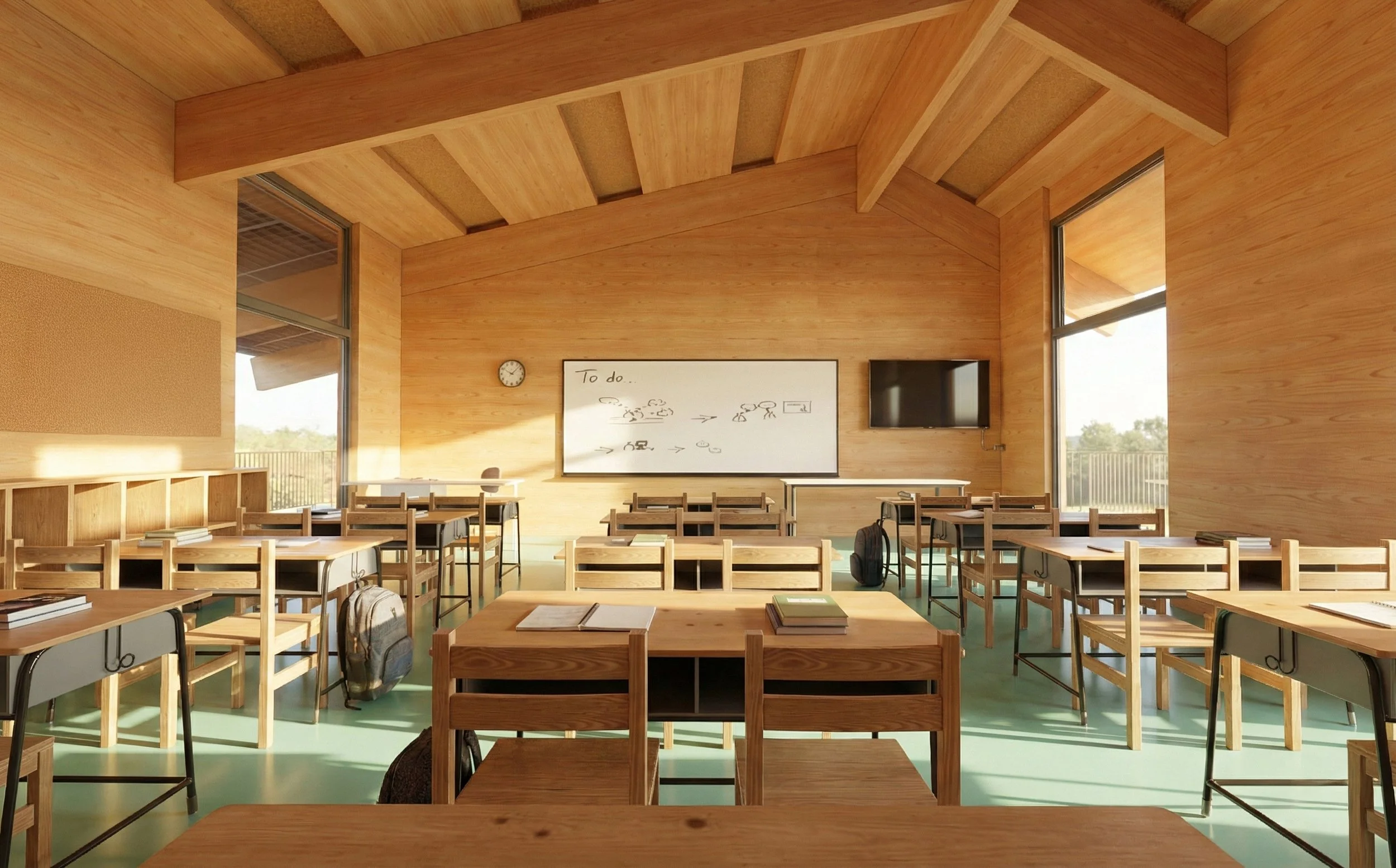
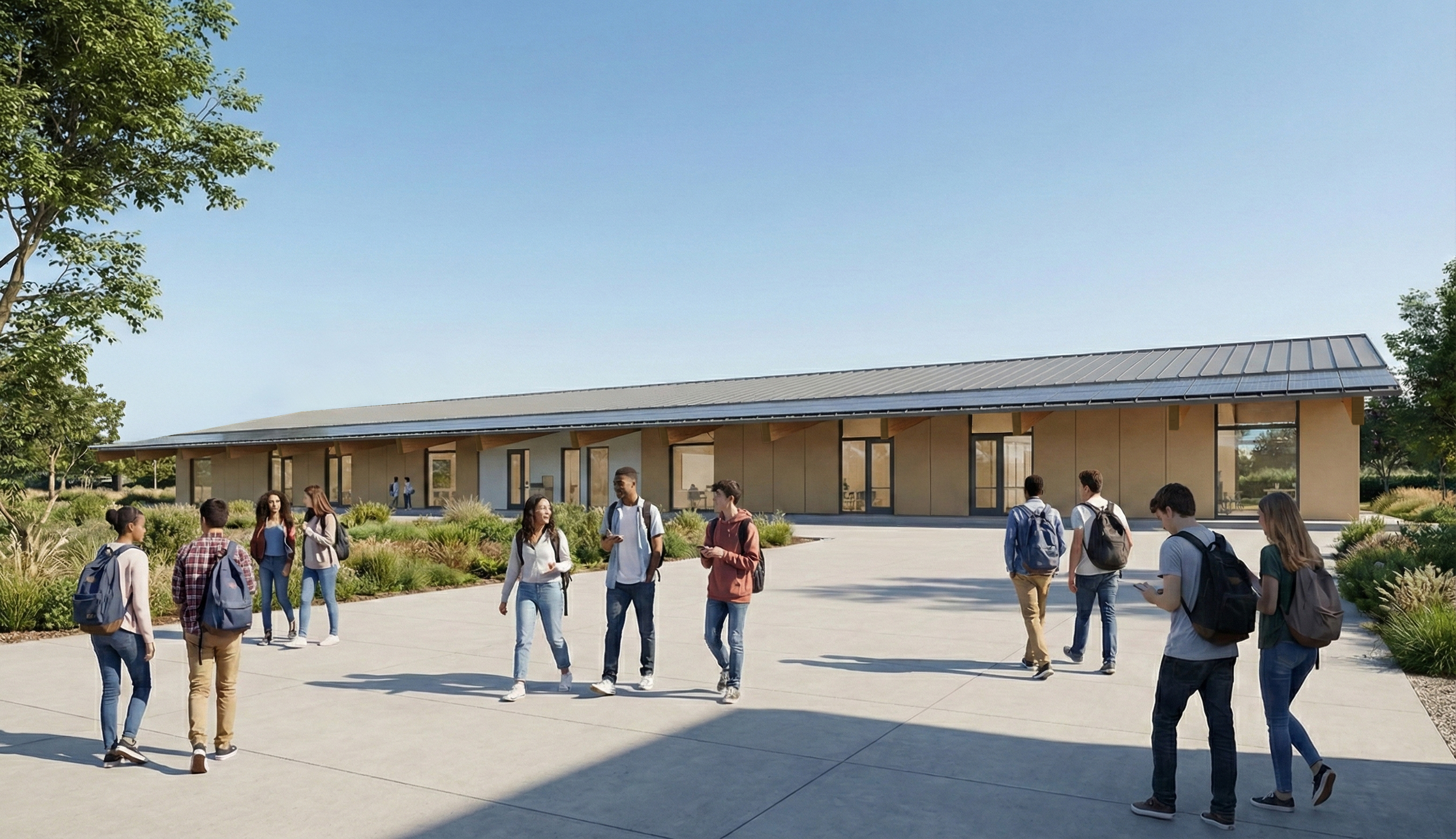
In Hawai’i’s educational sector, these problems have led to the proliferation of portable classrooms, cheaply manufactured units rapidly deployed to address the population boom of the 1960s. While intended as temporary solutions, a vast majority are kept well past their lifespan, some for over 40 years. Today, these units are outdated, expensive to maintain, and in drab condition, often forcing occupants to choose between natural daylight or air conditioning. While there are new school projects that build permanent structures, they suffer from the same cost and timeline constraints listed above. Even worse, in emergency situations like the aftermath of the Lahaina Fire of 2023, the state’s primary option for quickly supplementing destroyed capacity is to revert to the same temporary portable systems used for the last half-century.
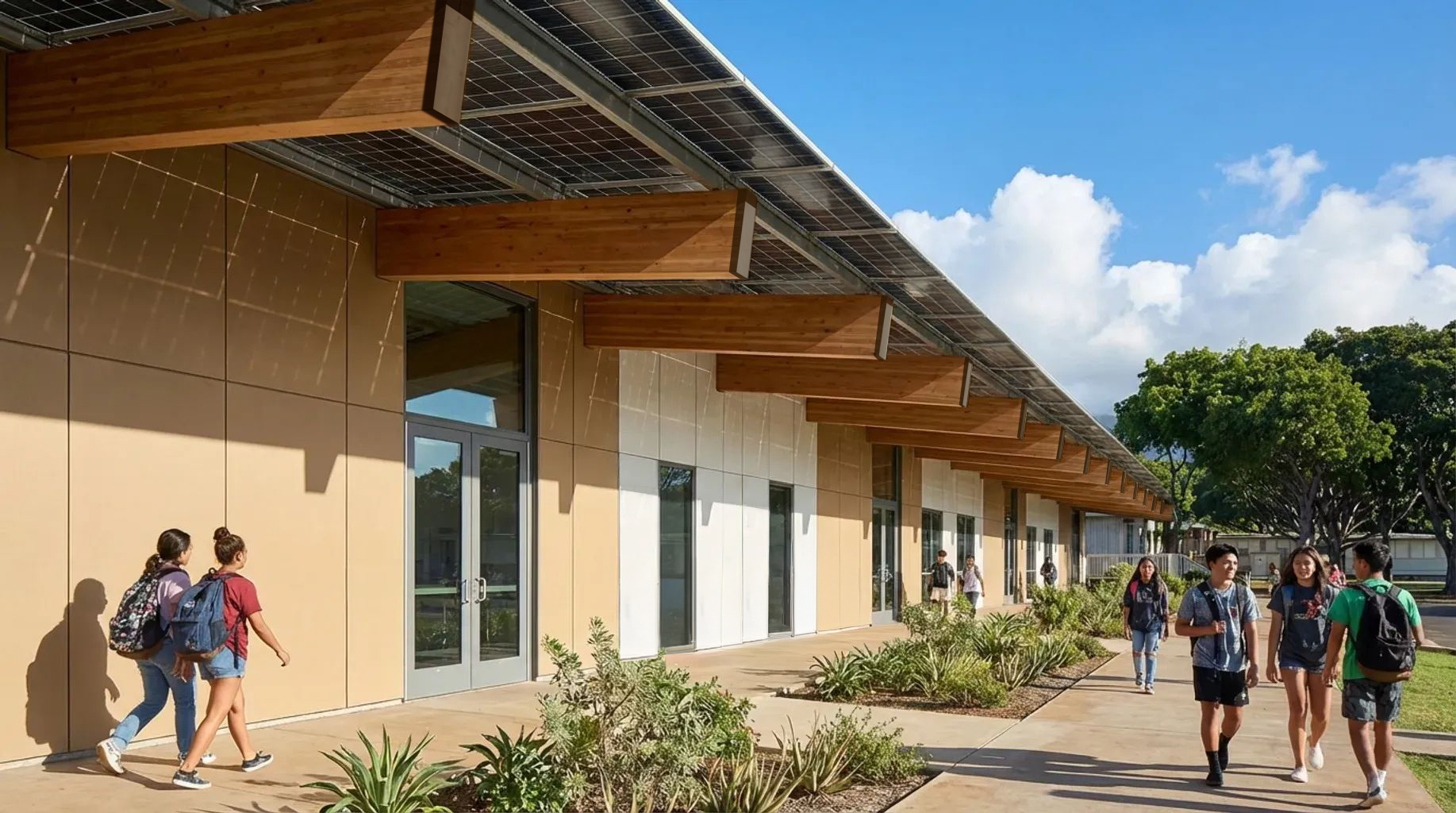
The Hawai’i School Facilities Authority (HISFA) has been tasked with solving these long-extant problems to enable the efficient building of school facilities. Through collaboration with HISFA and TimberQuest (a California based mass timber manufacturer), we aim to create inclusive, sustainable, and economical projects that do not just shelter students, but revitalize Hawai‘i’s construction industry rather than rendering it obsolete.
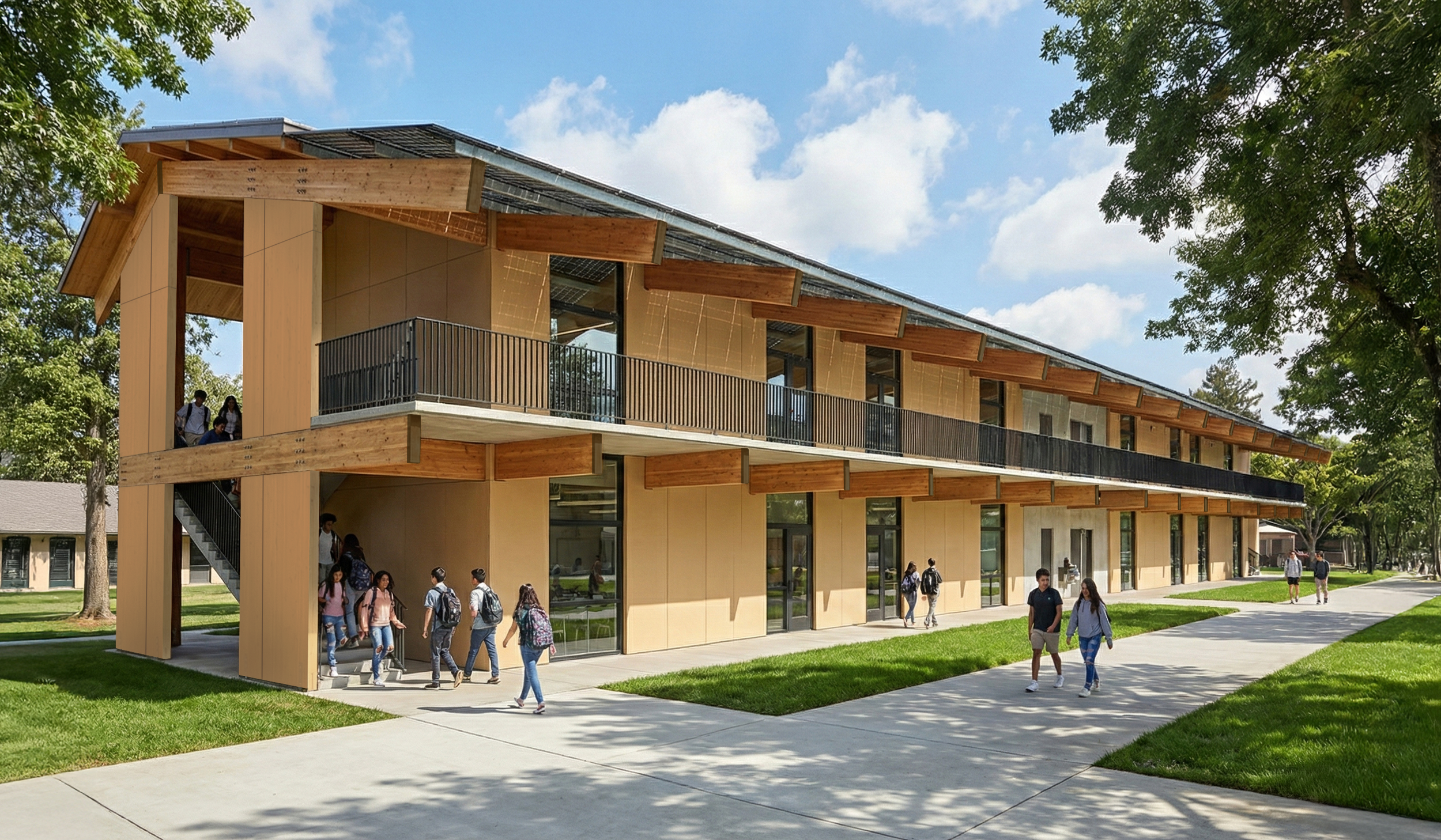
While Hawai‘i currently relies on heavy, carbon-intensive imports like concrete and steel, mass timber offers a strategic logistical advantage. By importing lightweight, prefabricated cross-laminated-timber (CLT) and glue-laminated-timber (GLT) elements, we can drastically reduce shipping volumes and costs compared to traditional materials.
Although fabrication begins in California to utilize existing high tech infrastructure, the final assembly relies on Hawai‘i’s local carpenters. This partnership provides a critical opportunity to upskill our local workforce in cutting-edge sustainable construction, preparing Hawai‘i’s industry for a future where such fabrication and construction is the norm.
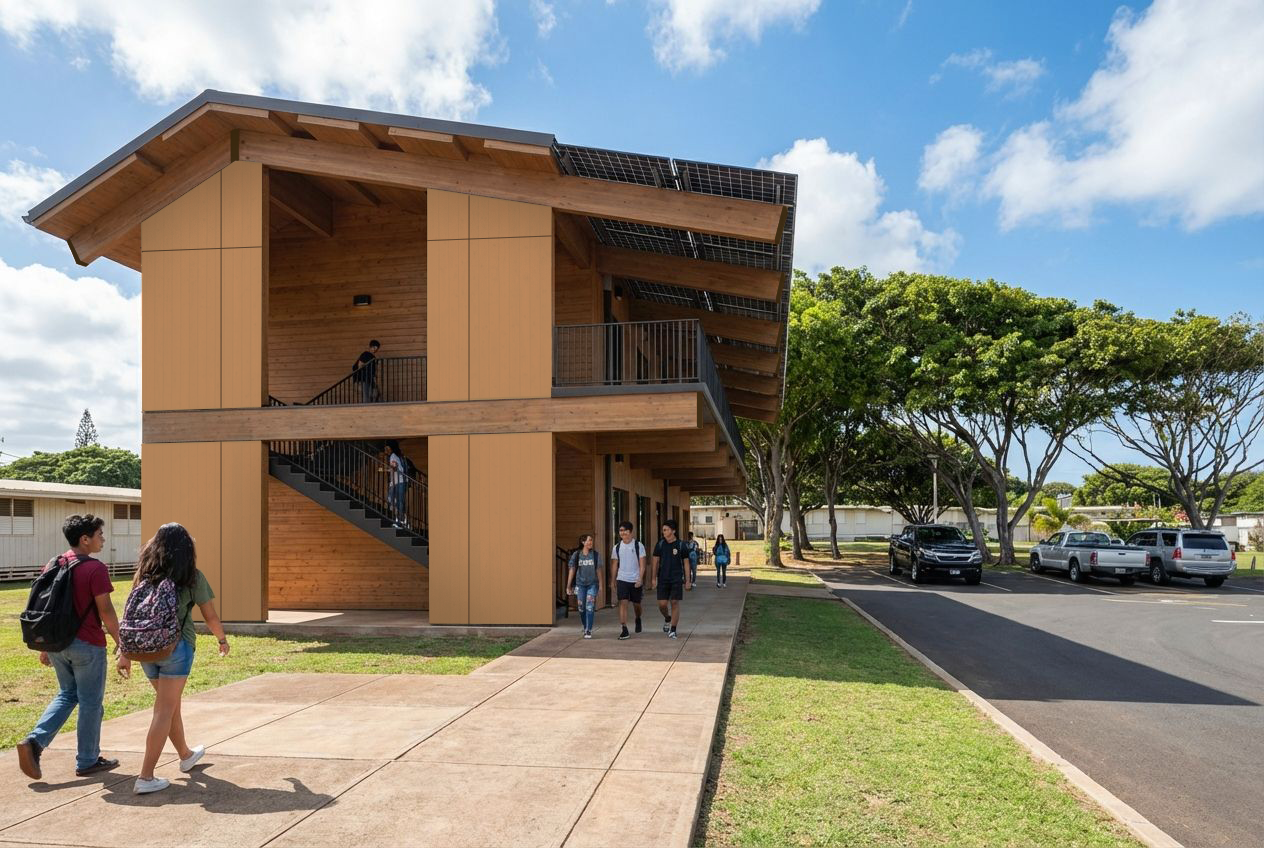
To address the tropical climate, the design departs from the "California standard." It features deep eaves and pitched roofs to shield walls from solar heat gain and driving rain, alongside pressure treated timber elements engineered to resist termites and humidity, offering a lifespan comparable to concrete but with a fraction of the carbon footprint.