
Building for Hawai‘i’s Future: Why Resilient Design Is Essential in a Changing Climate
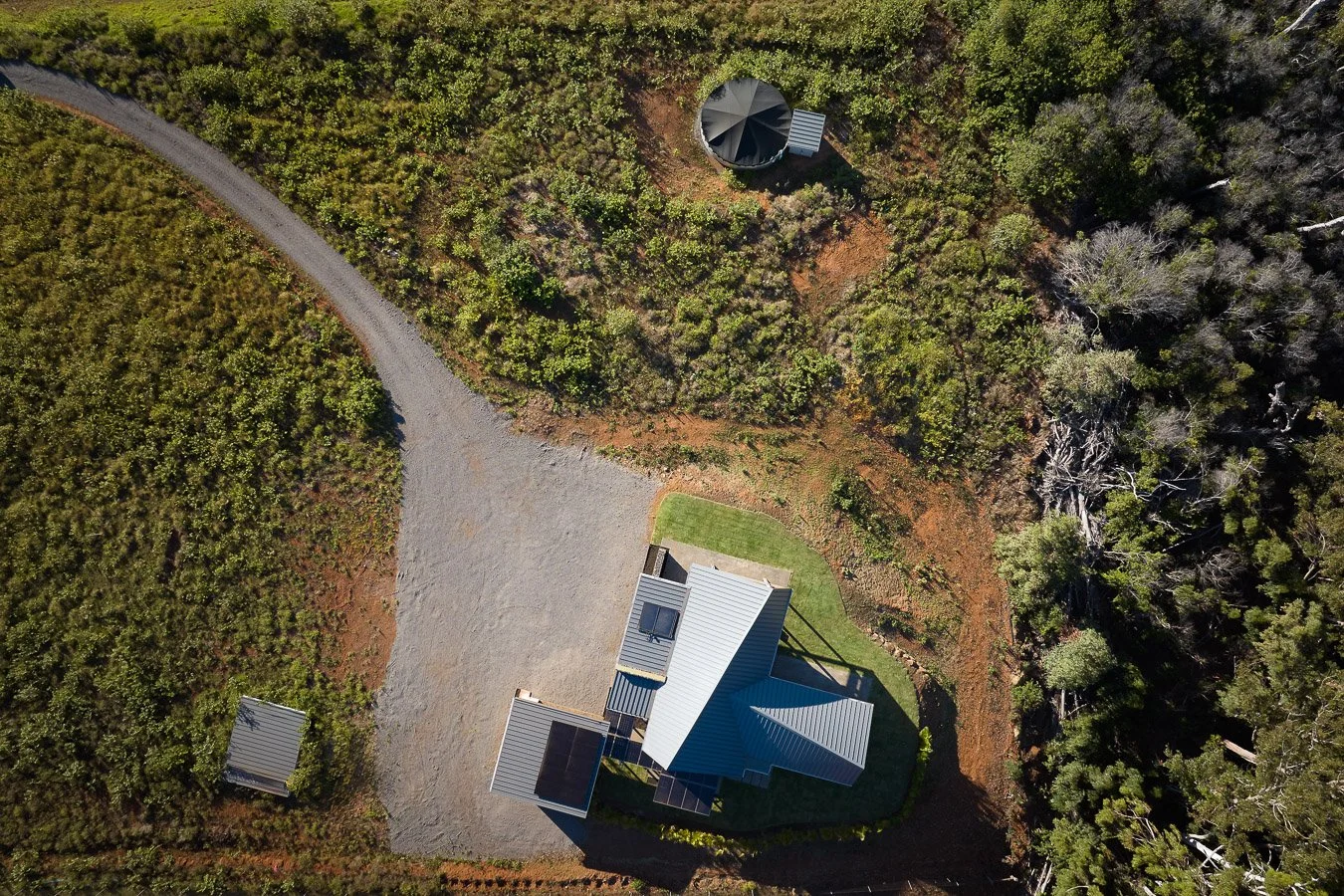
Photo: Travis Rowan Photography
As climate change accelerates, the way we build in Hawai‘i is becoming one of the most important conversations of our time. Resilient design is no longer optional — it is essential. Our islands face a convergence of climate-related threats, from sea-level rise and stronger storms to prolonged drought and increasing wildfire risk. The devastating Lahaina fires underscored a truth many communities are now confronting: past building practices are no longer enough to protect us from the realities of a changing climate.
Resilient design challenges us to rethink how homes and communities are planned, sited, and built — not based on yesterday’s conditions, but on the future we know is coming. In Hawai‘i, this means designing for fire, wind, water, and heat simultaneously, while honoring the land, culture, and people who call these islands home.
What Is Resilient Design?
Resilient design refers to thoughtful construction that anticipates, absorbs, and recovers from the impacts of environmental stressors — including storms, drought, heat waves, flooding, and sea-level rise. It’s about building structures that remain safe and functional not just today, but decades into the future. Traditional construction often focuses on past climate conditions; resilient design anticipates future conditions and challenges.
Why Hawai‘i Needs Resilient Design Now
Hawai‘i faces a unique set of climate pressures that make resilient design especially urgent. Our communities are concentrated along low-lying coastlines, where sea-level rise, coastal erosion, and storm surge threaten infrastructure and livelihoods. These trends aren’t distant concerns — they’re playing out here and now, with science showing rising vulnerability in Hawai‘i’s coastal zones.
This is not theoretical. Local adaptation planning tools — like the State’s Sea-Level Rise Vulnerability and Adaptation Report and the Hawai‘i Sea-Level Rise Viewer — show how future flooding and extreme weather events could affect homes, roads, and economic hubs.
Without resilient building strategies, we risk costly damage, prolonged recovery periods after storms, and cascading failures of essential services.

Photo: Travis Rowan Photography
Principles of Resilient Design for Hawai‘i
Resilient design is never one-size-fits-all. In Hawai‘i, it must respond to island-specific hazards — from coastal flooding to hurricanes — and, increasingly, wildfire risk. The following principles reflect the realities we face today and the future we must prepare for.
1. Design for Coastal Hazards
Buildings and infrastructure must be sited and engineered with sea-level rise and flooding in mind. This can include elevating structures, protecting foundations, and designing natural buffers that work with the land rather than against it. Smart siting decisions — knowing where not to build — are often the first step in resilience.
2. Wildfire-Resilient Design and Fire-Resistant Materials
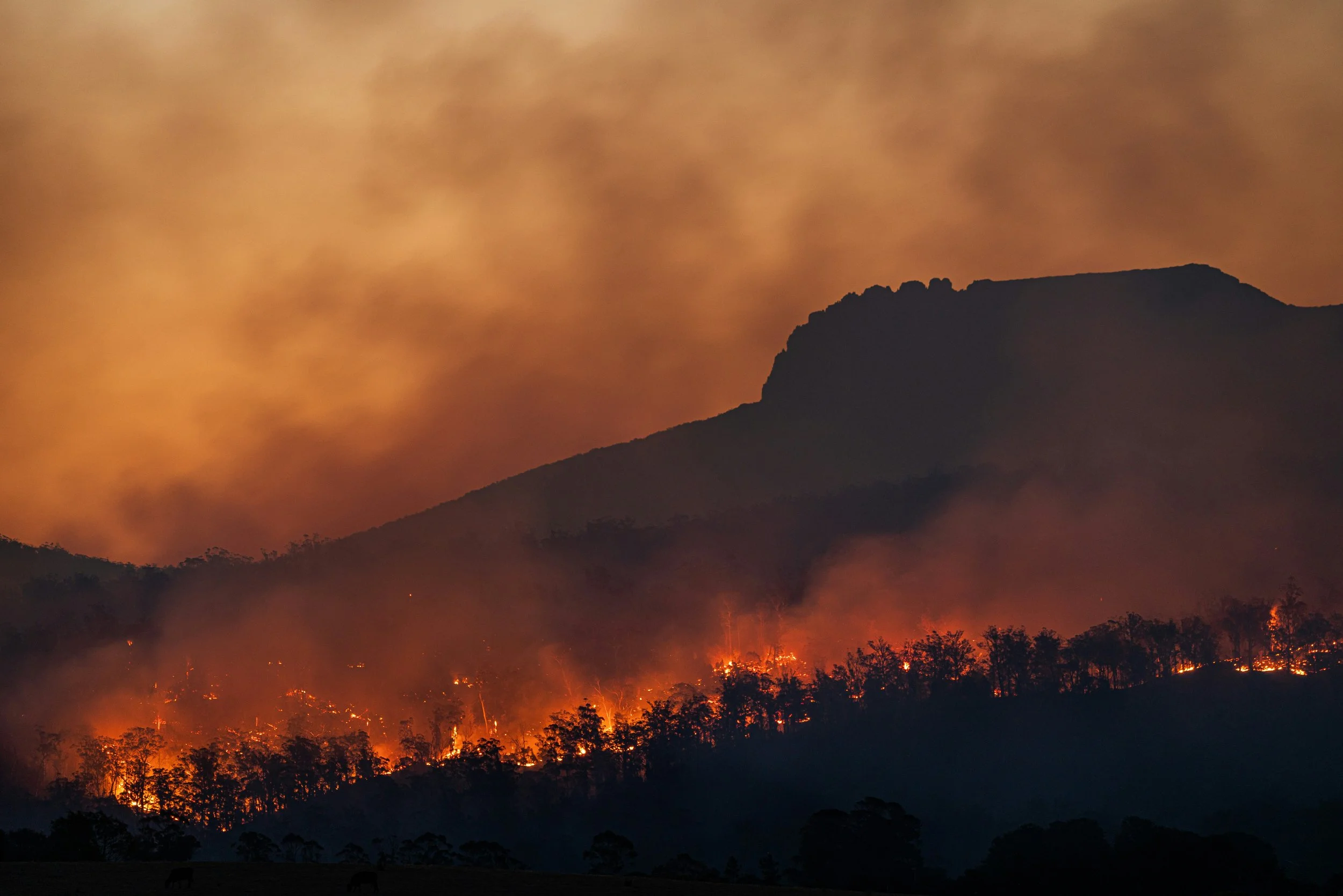
The 2023 Lahaina fires were a devastating reminder that wildfires are no longer a distant or mainland-only concern. As drought conditions intensify, invasive grasses spread, and wind events become more extreme, wildfire risk across Hawai‘i is increasing — especially in leeward and upland areas.
Resilient design in a wildfire-prone environment means prioritizing fire-resistant materials, thoughtful detailing, and defensible space. Non-combustible wall systems, fire-resistant roofing, protected vents, and minimized exposed wood can significantly reduce the risk of ignition. Equally important is how a building meets the landscape — maintaining clear zones, reducing fuel loads, and designing structures that are less vulnerable to wind-driven embers.
For Hawai‘i, fire resilience is not just about protecting individual homes — it’s about protecting entire communities from cascading loss.
3. Climate-Informed Material Choices
Hawai‘i’s buildings must withstand salt air, high humidity, intense sun, and high winds. Durable, low-maintenance materials that perform well over time reduce the need for frequent repairs and rebuilds — conserving resources while improving long-term resilience.
4. Passive Design and Energy Resilience
Designing with the climate — through proper orientation, shading, natural ventilation, and daylighting — reduces dependence on mechanical systems and keeps buildings habitable during power outages. Energy resilience is a critical component of safety during extreme weather events and emergencies.
5. Water and Landscape Resilience
Rainwater catchment, greywater reuse, and native landscaping help manage both drought and heavy rain events. Thoughtful site drainage reduces erosion and flooding, while regenerative landscape strategies support healthier ecosystems and safer communities.
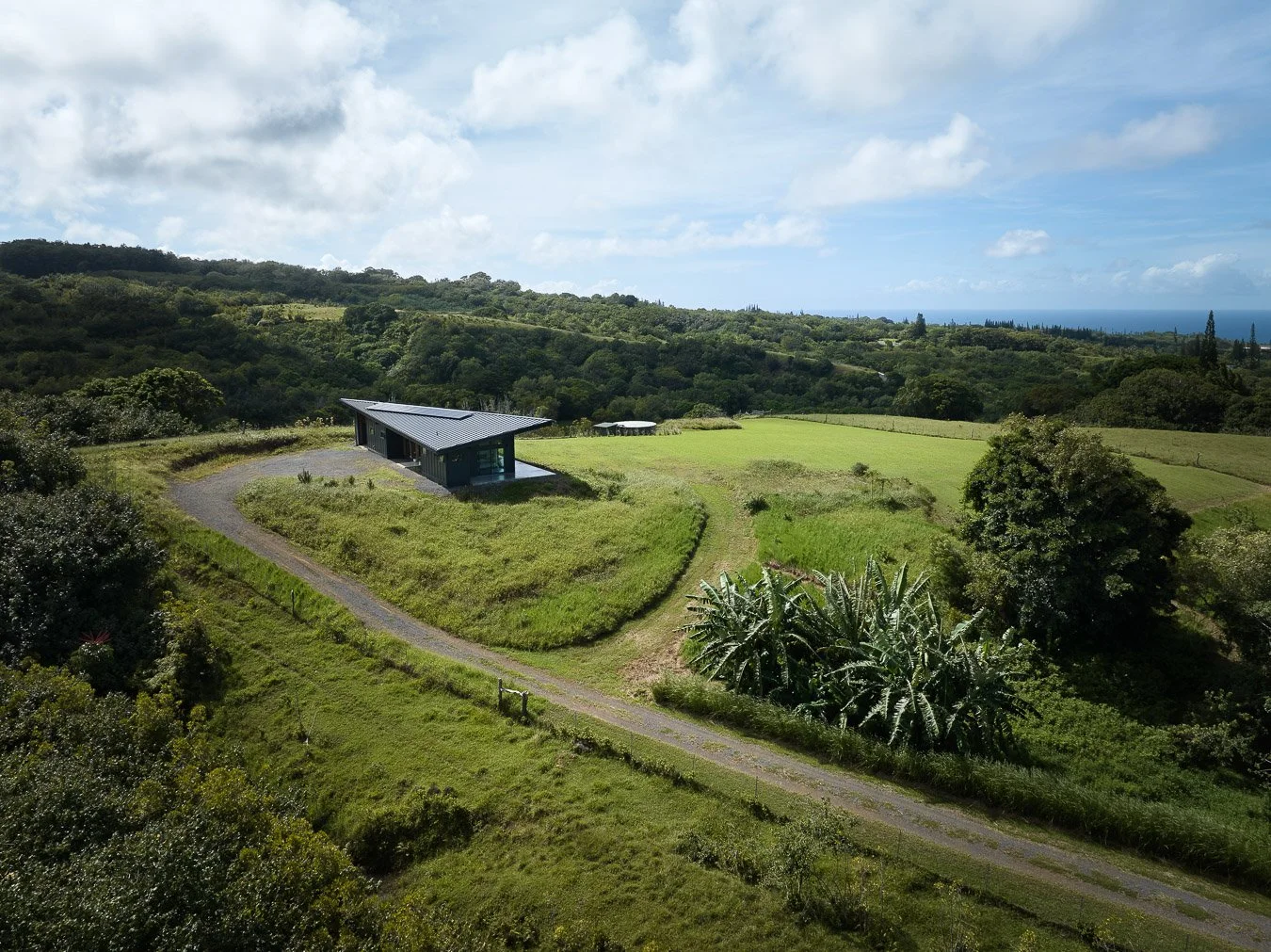
Photo: Travis Rowan Photography
The Economic and Social Value of Resilient Design
Investing in resilient building isn’t just smart from a safety perspective — it’s also economically beneficial. Studies show that well-planned resilience investments can extend the life of structures, protect local economies, and reduce long-term maintenance and disaster recovery costs.
At the community level in Hawai‘i, resilient design supports social stability and environmental health — reinforcing our deep cultural connection to ‘āina (land) and community. It’s about designing not just for survival, but for thriving futures.
What This Means for Hawaii Off Grid
The path forward for Hawai‘i is clear: we must build better. Climate change is already reshaping our environment, and the impacts — from coastal flooding to catastrophic wildfires — are being felt in real time. The Lahaina fires were not just a tragic event; they were a call to action. They showed us what is at stake when communities are not equipped with resilient, fire-conscious design.
At Hawaii Off Grid, resilience is about more than durability — it’s about responsibility. It’s about creating homes that are safer in the face of wildfire, stronger against storms, and capable of functioning during power outages and disruptions. By embracing fire-resistant materials, climate-responsive design, and off-grid systems, we can reduce risk, protect communities, and create structures that stand the test of time.
Building for the future means learning from loss, adapting with intention, and choosing resilience — for our homes, our communities, and our islands.